
Don't Let Your Supplier Misdeclare That DG Box — It's a 4.5-Year Prison Risk
Don't Let Your Supplier Misdeclare That DG Box — It's a 4.5-Year Prison Risk
Executive Summary
China stopped treating dangerous-goods misdeclaration as a paperwork slip. Under the new Chemical Safety Law, customs treats it as a crime — double penalties plus criminal liability. Before your next China shipment moves, lock down three questions: correct product name, a valid DG packing certificate, and four documents that all carry the same UN number.
Key Data
| What it costs you | Number |
|---|---|
| Random inspection rate at major ports | 30% |
| Filing amendment after a bounce | ¥3,000 |
| Re-inspection fee | ¥6,000 |
| Demurrage + detention at port | ¥9,000 |
| Company fine under Article 101 | 5–10× cargo value |
| Personal fine on the signer | ¥20,000–¥50,000 |
| Maximum prison term (endangering public safety) | 4.5 years |
Overview
China's new Chemical Safety Law changed the game. Customs now runs a zero-tolerance line on misdeclaration, concealment and false filing of dangerous goods. A few years back, the worst case was a fine and a lost box. Now it moves straight toward criminal charges.
Zhoushan customs caught one in mid-August: the papers said "plastic glasses, Christmas trees," but the container held 10 cartons of cold-light fireworks — UN0336, a Class 1 explosive — 18,000 pieces, 0.3 tonnes. In a container baking under the sun, the temperature hits 70°C. That's a moving bomb. And don't read this as just a returned shipment — the case went to the police. Criminal charges are now on the table.
The point is simple: the box you thought was "cleared with a wink" can become evidence against you.
Where You're Most Likely to Cross the Line
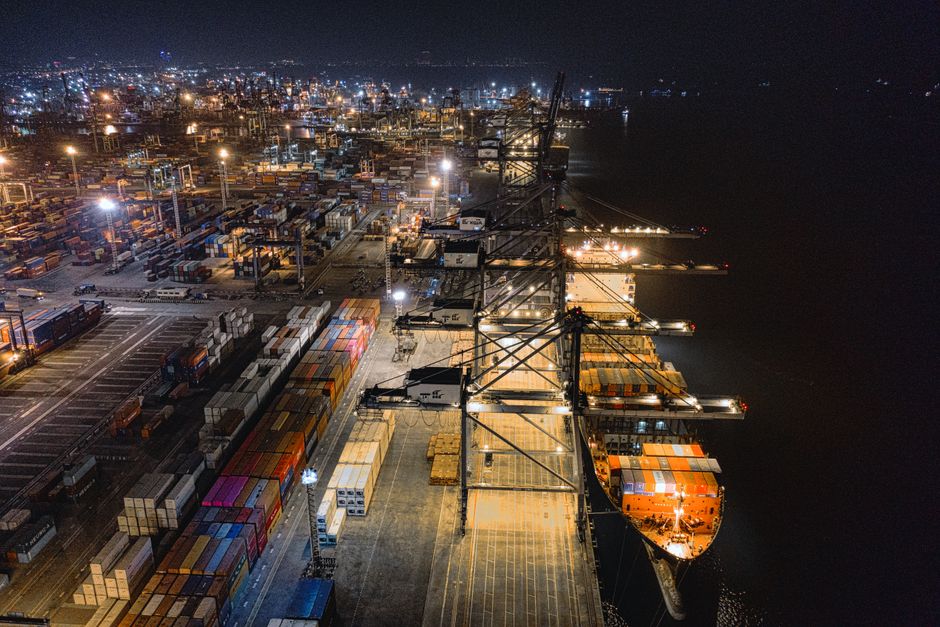
The first trap is breaking it up. Shippers split the dangerous goods, tuck them between general cargo, and stack tissue boxes or swim rings at each end to hide them. Customs scanners spot the image anomaly in seconds. Random inspection now runs at 30% at several ports — you really think that hides anything?
The second trap is the wrong name. A flammable liquid is Class 3. A corrosive is Class 8. A real dangerous good filed as an ordinary chemical — or a product sitting right on the concentration line, claimed as non-hazardous when it isn't — and the declaration is void before the box leaves the warehouse.
The third is documents that don't match. One wrong character in the UN number across your four filing documents and the whole declaration bounces back.
Here's the catch: the forwarder is the one most easily pulled along by the client. The client says "we've known each other for years, don't make it complicated," and you loosen your hand — but when it blows up, you're the first one held liable. My advice: the person who signs the declaration carries the risk, not the client who asked for the shortcut.

Looking Ahead
The cost stacks up fast. On the operations side: a filing amendment runs about ¥3,000, re-inspection ¥6,000, and demurrage plus detention at the port around ¥9,000 — and that's the light part. Then there's the carrier's DG booking queue and the hard 48 hours maritime declaration deadline before sailing; miss one link and the whole shipment rolls. The heavy part comes under Article 101 of the Chemical Safety Law: a company can be fined 5 to 10 times the cargo value, and the responsible individual another ¥20,000 to ¥50,000. Cross into endangering public safety and it's no longer about money — in Shanghai, the lead defendant on a fireworks misdeclaration got four and a half years.
Don't bet on it. The freight your client saved by cutting corners won't cover the hole.
My read: any dangerous goods job where someone asks you to "handle it flexibly" starts with three questions — is the name right, is the DG packing certificate complete, do all four documents carry the same UN number. If even one answer is shaky, walk away from the booking. Frankly, holding that line is worth more than any single shipment you'd win by bending it.
The line you hold is worth more than the one extra box.
Market Outlook
My read: Shanghai, Zhoushan and Yueyang customs have all stepped up inspections and prosecutions through August. Random opening rates will keep climbing, and the cost of misdeclaration has shifted for good — from "pay a fine" to "double penalty plus prison." What this means for your quote and your schedule is direct: build the DG document check into the quote stage, not after the box is stuffed. If your Chinese supplier pushes a "general cargo" filing on a product that smells like a dangerous good, stop and verify the UN number and packing certificate before you commit the sailing. Bottom line: the cheap shortcut is now the expensive one, and the person who signs is the person who pays.
JETWAY Supply Chain is your execution partner on the ground in China — based in Tianjin, licensed as an NVOCC (MOT) and a member of CIFA, FIATA and WCA. We handle special cargo and compliance (dangerous goods, chemicals, batteries) across ocean, air, rail and road, and we pre-check your documents before the box is stuffed so your filing clears the first time. Send us your next booking and we will run the checks above against your sailing date. Request a quote.