
Xiamen's 2.0 Rules Cap Your Battery Storage Box at 625 kWh — Over It, No Fast Lane
Xiamen's 2.0 Rules Cap Your Battery Storage Box at 625 kWh — Over It, No Fast Lane
Executive Summary
Xiamen Port switched on its 2.0 maritime guide for containerized battery storage systems on 7 August. Go over 625 kWh per box and the express lane closes — your filing goes the long way, and that can cost you two weeks.
Key Figures
| Effective date | Xiamen 2.0 guide live 7 August 2026 |
| Energy cap per unit | 625 kWh rated — over it, no express lane |
| Xiamen H1 2026 volume | 127,000 TEU of storage containers, +41% YoY |
| Real rejection seen | 780 kWh box bounced — 11 days, ~¥21,000 in fees |
| New equipment gates | State-of-charge band + gas detection + auto sprinkler |
| Target clearance | Under 18 hours — only if paperwork is complete |
Overview
Xiamen Port switched on its 2.0 maritime guide for containerized lithium-battery energy storage systems on 7 August. Plainly, it's the first operating manual in China built for shipping these "oversized power banks" overseas. The old version came out in 2023 — this is a full rewrite, not a tweak.
The new version pulls sodium-ion and hybrid batteries into the rules too. Before this, carriers wouldn't touch them — cargo sat on the dock with no ship willing to take it. Now there's a written path.
It tracks the IMDG 42-24 amendment and pulls in the latest national and industry standards. My read: this isn't filler. It's built to speed up how fast these boxes get offshore.
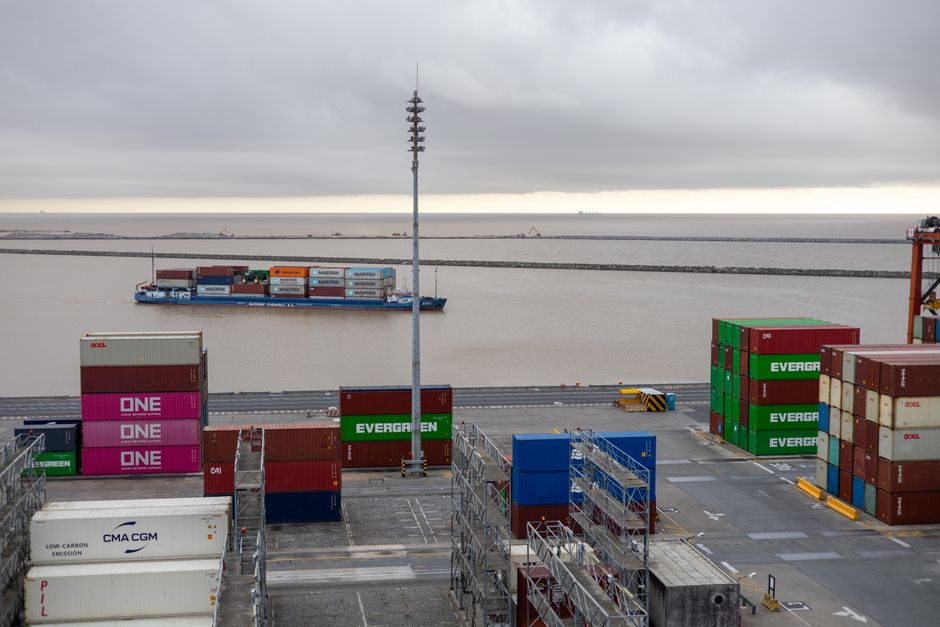
Forwarders in Tianjin, Shanghai and Ningbo are all watching this because storage-container exports are booming — Xiamen moved 127,000 TEU in the first half, up 41% year on year, and any box over the cap gets bounced back to square one. The cap is real, and it's spreading.
Key Details
Here's the hard line: 625 kWh max rated energy per unit. Your storage box, if its nameplate total goes over that, can't use the 2.0 express lane.
The trap is real. Makers hate "wasting" a single watt-hour, so they pack boxes to 700 or 800 kWh. Nobody checks at the factory. But at the customs gate, over the line means rejection and a do-over. It's written into the guide now.
Last week at Xiamen I watched a real rejection. A client's box was tagged 780 kWh; the system matched it against the 625 kWh cap and killed it flat, then rolled back the whole filing. Return, re-file, re-declare, plus demurrage — 11 extra days, about ¥21,000 in storage and amendment fees. That's before the late-delivery penalty from their buyer, which bit harder than the fees. So 625 kWh isn't a soft line. It's a cliff. One more thing: if your box moves through Tianjin, the maritime filing also needs the battery spec sheet and UN38.3. Think you can fudge a 625 kWh-plus unit? The system flags it red in a glance.
Looking Ahead
Two new hard gates. Your state-of-charge at departure has to stay inside the set band. And the unit must carry gas detection plus an automatic sprinkler module.
Before, this rested on the carrier's good will. Now it's in the guide — and a failure traces straight back to your shipment. Don't bet on it. A box stuck on the quay costs more than the fine.
Implications
Check three things. Is your per-unit energy at or under 625 kWh? Is state-of-charge inside the guide's band? Are gas detection and the sprinkler module fitted?
Clearance is now targeted under 18 hours — if your paperwork is complete. Don't bet on it. Miss one document and 18 hours becomes 18 days.
Xiamen is the smoothest path. But Tianjin takes storage boxes under this same new standard too. If your shipment sails in September, pull the battery spec sheet now and check it line by line. Read that again.
Frankly, this guide is there to make your pre-shipment checks real. Half a day checking parameters beats a rejection and a fine every time. Tianjin storage-box clients should have those spec sheets open this week. Want us to check your sheet against the 2.0 rules before you book? Request a quote.
Don't bet. Check first, then ship. That sentence belongs taped to your customs desk.
Market Outlook
My read: more ports will copy Xiamen's 2.0 playbook within the year — Shanghai and Ningbo already have their eyes on it. The 625 kWh line won't loosen; if anything, the equipment gates get stricter as insurers push back on battery cargo. What this means for your quote: build a half-day document check into every battery-storage booking out of China, and ask your supplier for the nameplate energy before you price the box. Lock September sailings now — the express lane fills route by route, and a bounced filing costs you two weeks, not two days. See how we pre-check dangerous-goods and battery paperwork on our special cargo page.
JETWAY Supply Chain is your execution partner on the ground in China — based in Tianjin, licensed as an NVOCC (MOT) and a member of CIFA, FIATA and WCA. We handle special cargo and compliance (dangerous goods, chemicals, batteries) across ocean, air, rail and road, and we pre-check your documents before the box is stuffed so your filing clears the first time. Send us your next booking and we will run the checks above against your sailing date. Request a quote.