
CMA CGM to Acquire FedEx Supply Chain for $1.4 Billion, Doubling Its North American Contract Logistics Footprint
CMA CGM to Acquire FedEx Supply Chain for $1.4 Billion, Doubling Its North American Contract Logistics Footprint
Executive Summary
CMA CGM, the world's third-largest container shipping line, has agreed to buy FedEx Supply Chain from FedEx for an enterprise value of USD 1.4 billion. The unit will be folded into CMA CGM's CEVA Logistics arm, nearly doubling CEVA's North American contract-logistics headcount to roughly 20,000 employees and adding close to 150 warehouses. For overseas forwarders and procurement teams, the deal is a direct signal that ocean carriers are moving further up the value chain — and closer to your customers. Shippers should audit any cargo currently sitting in FedEx Supply Chain facilities and confirm service continuity through the integration period.
| Transaction value | USD 1.4 billion (enterprise value) |
| Employees acquired | ~10,000 (FedEx Supply Chain) |
| CEVA North America headcount post-deal | ~20,000 (up from ~10,000) |
| Warehouse network | ~150 facilities across 240+ locations |
| CMA CGM's 2024 Bolloré Logistics deal | ~EUR 4.85 billion |
What Happened
CMA CGM Group, the world's third-largest container shipping line, announced an agreement with FedEx to acquire its supply-chain business, FedEx Supply Chain, for an enterprise value of USD 1.4 billion. The transaction is expected to close within 2026, subject to customary regulatory approvals, after which the unit will be integrated into CMA CGM's CEVA Logistics network.
To be precise about scope: what is being sold is not FedEx Group as a whole, nor its express parcel core, but the third-party and contract-logistics segment — the part that handles order fulfillment, warehousing, returns management, and supply-chain solutions — with a current workforce of nearly 10,000 employees.
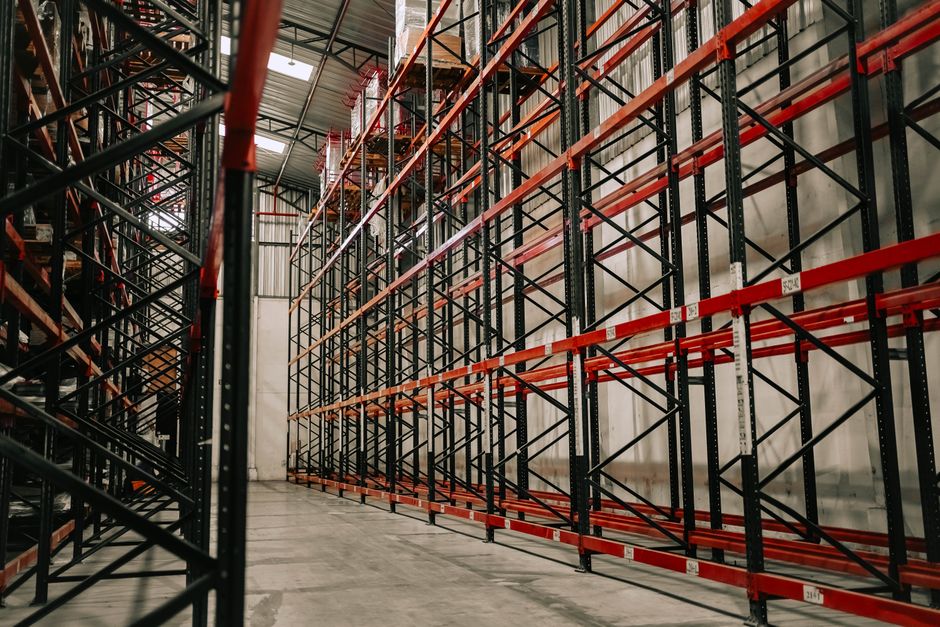
Once integrated, CEVA's North American contract-logistics scale will roughly double, giving it about 150 warehouses in the region, a total workforce of around 20,000, and a service network spanning more than 240 locations. The two parties also plan a multi-year air and ocean commercial cooperation agreement — in effect, the buyer locks in a long-term cargo base at the same time.

The Impact Chain
This is not an isolated move but the fourth step in CMA CGM's roughly seven-year push to become "less of an ocean carrier." In 2019 it took control of CEVA, transforming from a liner company into an integrated logistics group. In 2022 CEVA absorbed Ingram Micro's e-commerce fulfillment business. In 2024 it acquired Bolloré Logistics for roughly EUR 4.85 billion, adding air and ocean freight forwarding and an African network. Now it fills the North American contract-logistics gap.
The logic is straightforward: ocean freight is a highly cyclical business, and relying on port-to-port margins is volatile. CMA CGM, Maersk, Hapag-Lloyd, and MSC are all using terminals, warehousing, air, road, and contract logistics to keep customers inside their own chain for as long as possible. For shippers, that means more "one-contract, end-to-end" options. For smaller forwarders, it means your customers can increasingly be approached — and taken — directly by the carrier.
The more immediate pressure shows up in pricing. When a carrier controls both capacity and the delivery network, the all-in door-to-door rate it offers large customers can be subsidized by ocean margins on the land side — a cost structure an asset-light forwarder simply cannot match. On the North American warehousing and distribution line, the probability of a price war over the next year or two has risen markedly.
What You Should Do
Short term: If any of your customers' goods are stored in FedEx Supply Chain's North American warehouses, ask now about service continuity and contract-transfer terms during the transition. Experience shows that the six months around a large merger's close are a high-risk window for system cutovers and staff attrition — returns processing and inventory reconciliation are where problems most often surface.
Medium term: Do not try to out-price the carriers on "all-in, end-to-end" bids. A smaller forwarder's moat has never been price; it is response speed, exception handling, and specialty-cargo capability — cold chain, dangerous goods, oversized and out-of-gauge, and expedited customs clearance. These are precisely the jobs the giants' standardized networks are least willing to take.
A more pragmatic path is reverse cooperation: platforms like CEVA still need local execution partners on the ground. Rather than be squeezed out, position yourself as the local delivery contractor inside their North American network — become a link in the chain rather than the link that gets replaced.
Market Outlook
Carrier acquisitions of logistics assets are accelerating. Since the pandemic, MSC and CMA CGM have bought at roughly three times the industry-average pace; MSC alone has deployed about USD 30 billion across four major deals in four years. We expect further acquisitions of regional contract-logistics specialists in North America and Southeast Asia over the next twelve months. The freight-forwarding ladder will split more sharply: either scale into the major networks, or go deep on niche, hard-to-handle cargo categories. For forwarders, the practical takeaway is to map how much of your volume already lands in carrier-owned networks, and decide deliberately whether to compete, partner, or specialize.
JETWAY Supply Chain provides ocean freight, air cargo, rail, customs brokerage, and warehousing solutions across Asia-Europe-US trade lanes. Request a quote or contact our team.