
Freight Rate Weekly: US Port Fees on China-Linked Ships Return on Nov 10
Freight Rate Weekly: US Port Fees on China-Linked Ships Return on Nov 10
Executive Summary
The tariff truce now runs to Jan 10, 2027. The port fee pause sits in a separate USTR notice and expires Nov 9, 2026 at 23:59 Eastern — 19 days from today. No Federal Register notice has moved that date.
| $120/FEU |
| $153/FEU |
| $800/FEU |
| 100% |
Overview
Here's the thing: the tariff truce and the port fee pause are two different documents. USTR built these fees out of its Section 301 investigation into China's maritime, shipbuilding and logistics sectors, and collection started Oct 14 2025 under FR 2025-06927. After the leaders' meeting in late October 2025, Washington paused them for one year from Nov 10, 2025, and Beijing paused its own retaliatory fees on US-linked ships. The end date lives in FR 2025-19873: Nov 9, 2026, 23:59 Eastern.
Don't bet on it being extended automatically. As of Oct 13, no Federal Register notice has moved that date.
The same pause also covers the 100% duties on Chinese ship-to-shore cranes and on intermodal chassis and chassis parts. And on the same night, 178 exclusions from the China Section 301 tariffs run out. One lands on your freight bill, the other on your duty bill.
Key Details
Put simply, the fee follows the ship, not the cargo. Chinese owners or operators pay per net ton: $50/net ton from Oct 14 2025, scheduled to step up to $80/net ton. Operators of Chinese-built ships pay the higher of a net-ton rate or a per-container rate: $120/FEU at the 2025 tier, $153/FEU from April 2026. Foreign-built vehicle carriers pay $46/net ton. One charge per US rotation, at the first US port, capped at five times a year per ship.
The pause notice never says which tier applies when collection resumes. The catch is that nobody has clarified it publicly. Plan against the higher number.
That is where your exposure sits. Take a 50,000 net ton Chinese-operated ship: at $80/net ton that is US$4 million per voyage, and spread across 5,000 boxes discharged in the US it works out near $800/FEU. Our arithmetic, not a carrier tariff — the real number depends on how many boxes a ship drops and how the line spreads the cost.
Looking Ahead
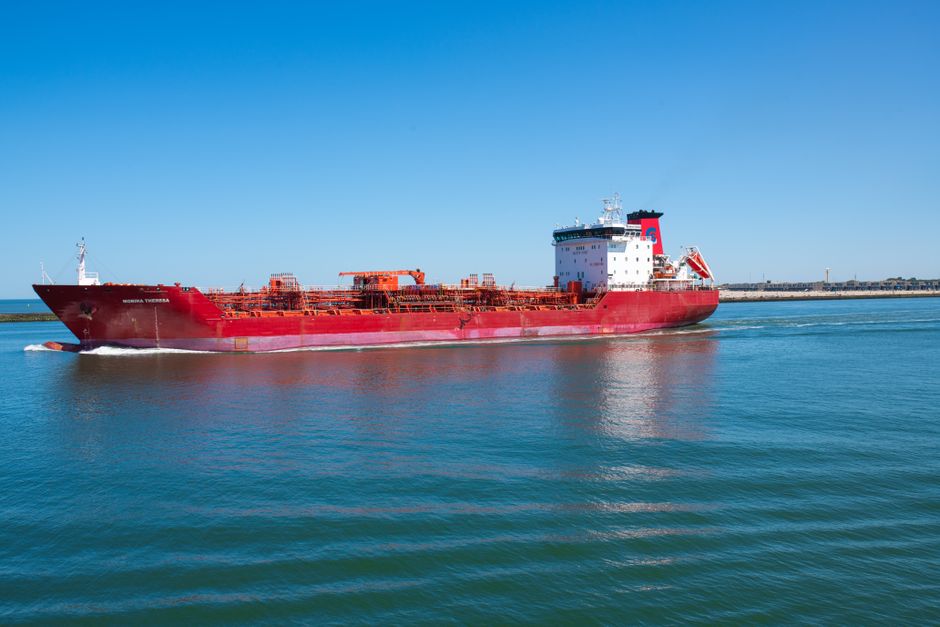
Watch out for the exemption list on the Chinese-built track. Three categories are out: ships of 4000 TEU or less, vessels arriving empty, and voyages under 2,000 nautical miles. Feeder and short-sea services can qualify. Almost every big transpacific ship is well over 4000 TEU, so the mainline services you book will not.
So what should you do this week? Check the build yard and the operator behind the vessel name on your booking. On the same loop, swapping one sailing for another can move a box from an exempt category into a chargeable one.
Realistically, carriers will not absorb this. Alphaliner estimated in October 2025 that the top ten container lines faced about US$3.2 billion of these fees across 2026 if they held their US deployments unchanged. Some 209 US and international industry groups wrote to USTR in late September 2025 asking for the pause to be extended.
Market Outlook
Market participants should monitor upcoming rate announcements and capacity adjustments closely.JETWAY Supply Chain is your execution partner on the ground in China — based in Tianjin, licensed as an NVOCC (MOT) and a member of CIFA, FIATA and WCA. We handle special cargo and compliance (dangerous goods, chemicals, batteries) across ocean, air, rail and road, and we pre-check your documents before the box is stuffed so your filing clears the first time. Send us your next booking and we will run the checks above against your sailing date. Request a quote.