
Persian Gulf Rates Hit $6,139 — Your Kuwait Box Probably Lands in Fujairah First
Persian Gulf Rates Hit $6,139 — Your Kuwait Box Probably Lands in Fujairah First
Executive Summary
Far East–Persian Gulf rates reached $6,139/TEU in the 28 August SCFI print, up $410 or 7.1% in a week — the second-steepest move of any deep-sea lane. At the same time, Maersk's 31 August Middle East update confirms that cargo for the UAE, Qatar, eastern Saudi Arabia, Kuwait and Bahrain is being routed via Khor Fakkan, Salalah, Sohar and Jeddah and then trucked inland. If you quoted Kuwait as a direct discharge, your quote is now wrong twice over: wrong port, and missing the inland leg.
| Lane (Far East →) | Rate | Weekly change | Note |
|---|---|---|---|
| Persian Gulf | $6,139 | +$410 / +7.1% | Second-steepest rise of all deep-sea lanes |
| India | $3,090 | +$291 / +10.4% | Second straight weekly rise (prior week +13.83%) |
| Southeast Asia | $796 | +$68 | Moving the same direction |
| Mediterranean | $3,557 | — | Context only |
| Europe | $2,716 | — | Context only — Europe is falling |
Where the Gulf lane stands this week
Start with the price. The Shanghai Shipping Exchange put Far East–Persian Gulf at $6,139/TEU in its 28 August SCFI print, up $410 or 7.1% in seven days. Far East–India came in at $3,090/TEU, up $291 or 10.4% — and that lane has now risen two weeks running, 13.83% the week before and 10.4% this week. Stack them and you are well above late July. Southeast Asia is moving the same way at $796/TEU, up $68.
The Gulf is climbing. Europe is falling. Two different markets.
Do not use a soft Europe rate to beat down your Middle East quote. That argument stopped working a while ago.
This is not a demand story. It is a risk story. Transit risk around Hormuz has not gone away, carriers will not schedule vessels into the upper Gulf on a normal rotation, and effective capacity stays squeezed — so the rate holds firm. You see 7.1% on the screen, but what sits behind it is fewer ships, longer diversions and pricier war-risk cover, and all three of those end up in your quote.
Why your upper-Gulf box is going the long way
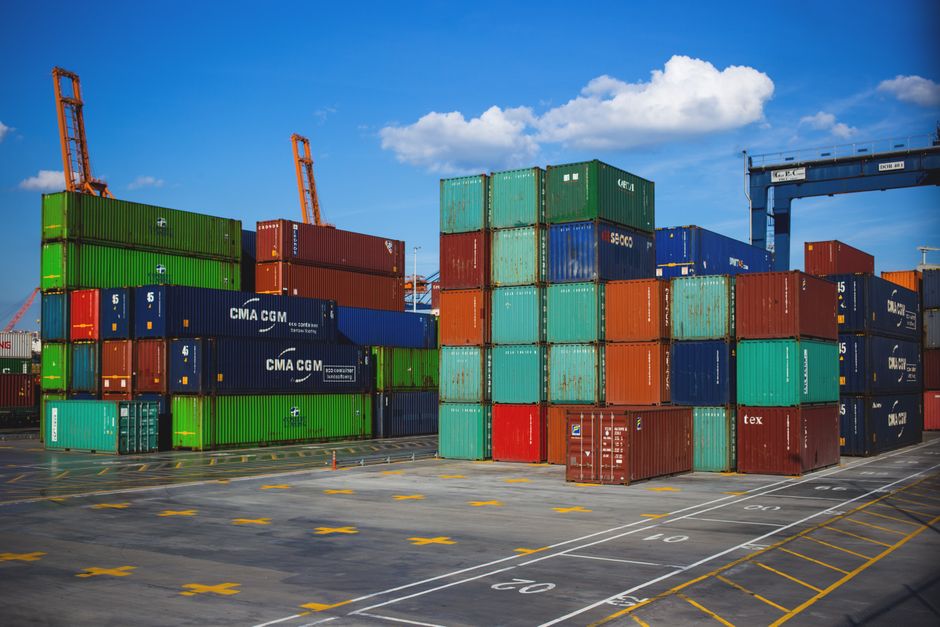
Here's the thing. Maersk's Middle East update of 31 August is specific about this: cargo bound for the UAE, Qatar, eastern Saudi Arabia, Kuwait and Bahrain is partly being routed via Khor Fakkan, Salalah, Sohar and Jeddah, then moved inland by land bridge to the final market. Jebel Ali is not closed — but berthing there is confirmed case by case, booking by booking, not as a standing call. Fujairah and Khor Fakkan, along with Oman's Sohar and Salalah, all sit outside the Hormuz risk zone, and all four are picking up more transhipment work because of it.
The trouble is the last leg. Once your box lands at an outer port, a truck has to finish the job — and the trucking side is tightening too. Maersk has suspended a batch of inland bookings from Jeddah to the UAE, Oman and Qatar, and another batch from Salalah and Sohar into the UAE, Saudi Arabia, Kuwait, Bahrain and Qatar.
Transhipment ports are clogging. Truck rates are climbing.
Jeddah is the clearest case. Landside delay after discharge now runs 10 to 12 days, and truck rates heading toward the UAE have at one point hit twice the normal level. MSC's $1,000 per 40ft congestion surcharge on Jeddah was withdrawn on 1 September. Do not read that as relief. The congestion did not leave — it just comes back to you under a different line item.
Five things to fix before your next Middle East booking
Bottom line: five changes, and none of them takes more than an email.
One. Confirm the actual discharge port before you book. You asked for Kuwait; the box will most likely come off in Fujairah.
Two. File dangerous goods documentation early. DG cargo on this lane needs the DGD, the MSDS and the container packing certificate — all three, matched to the current IMDG requirements. Do not wait for the carrier to chase you, because on a lane this tight the chase costs you the sailing. We run exactly this pre-check on dangerous goods and chemical compliance before the box is stuffed.
Three. Do not quote ocean freight alone. Put the inland leg — Fujairah to final destination — on its own line, and state who pays it. That money cannot be saved. It can only be argued about later, or agreed now. Agree now.
Four. Routing via Jeddah? Build the 10 to 12 days of landside delay into your delivery promise. Do not quote your customer the transit time you used last quarter.
Five. And this is the one people miss. A 7-day validity is already too long on this lane. Quote shorter, and re-quote more often.
Market Outlook
The Middle East does not go back to normal this quarter. Risk premium, transhipment congestion and rising inland cost are stacked on top of each other, and every one of them shortens the shelf life of a quote. My read: on this lane, quoting short and revising often beats quoting long and eating the difference.
Watch two things. Whether Maersk reopens the suspended inland bookings out of Jeddah, Salalah and Sohar — that is the fastest signal that the land bridge is easing. And whether the Gulf lane posts a third weekly rise: two consecutive weeks is a squeeze, three is a repricing.
Frankly, the operational change matters more than the rate here. A box that discharges at Khor Fakkan instead of Jebel Ali changes your trucking cost, your transit time and your delivery promise, and none of those show up in the SCFI number. So here is the question for your desk this morning: on your open Middle East bookings, do you know the actual discharge port on each one? If you have to go and check, that is the first thing to do.
JETWAY Supply Chain is your execution partner on the ground in China — based in Tianjin, licensed as an NVOCC (MOT) and a member of CIFA, FIATA and WCA. We handle special cargo and compliance (dangerous goods, chemicals, batteries) across ocean, air, rail and road, and we pre-check your documents before the box is stuffed so your filing clears the first time. Send us your next Middle East booking and we will confirm the actual discharge port, the inland leg and the DG document set before you commit. Request a quote.