
A Carrier Billed $35,000 for Misdeclared Cargo — A Chinese Court Cut It to $20,000
A Carrier Billed $35,000 for Misdeclared Cargo — A Chinese Court Cut It to $20,000
Executive Summary
A carrier demanded USD 35,000 after a container of fireworks was booked as glassware. Ningbo Maritime Court cut the claim to USD 20,000 — a 43% reduction — because the "fine" was never a fine. It is liquidated damages, and liquidated damages can be reduced. If a carrier hands you a penalty invoice after a misdeclaration in China, you have room to negotiate. Here is the ruling, and what to do with it.
| Court: Ningbo Maritime Court, (2021) Zhe 72 Min Chu No. 632, judgment 30 June 2021 |
| Case-library reference: 2024-10-2-223-001 (People's Court Case Library) |
| Lane: Ningbo to Bandar Abbas, Iran |
| Booked as glassware; found to be fireworks, Class 1 explosives |
| Carrier's claim: USD 35,000 penalty plus RMB 6,000 |
| Court's award: USD 20,000, reduced by about 43% |
| Administrative fine on the carrier: RMB 100,000 (Ningbo port authority, 16 Jan 2020) |
| Also awarded: USD 4,553 detention, RMB 838 de-stuffing and container-list fees, split 50/50 by fault |
| Interest ran from 1 August 2020 |
| Incident to judgment: about 19 months (Nov 2019 to Jun 2021) |
| Governing provision: Civil Code Article 585 |
Overview
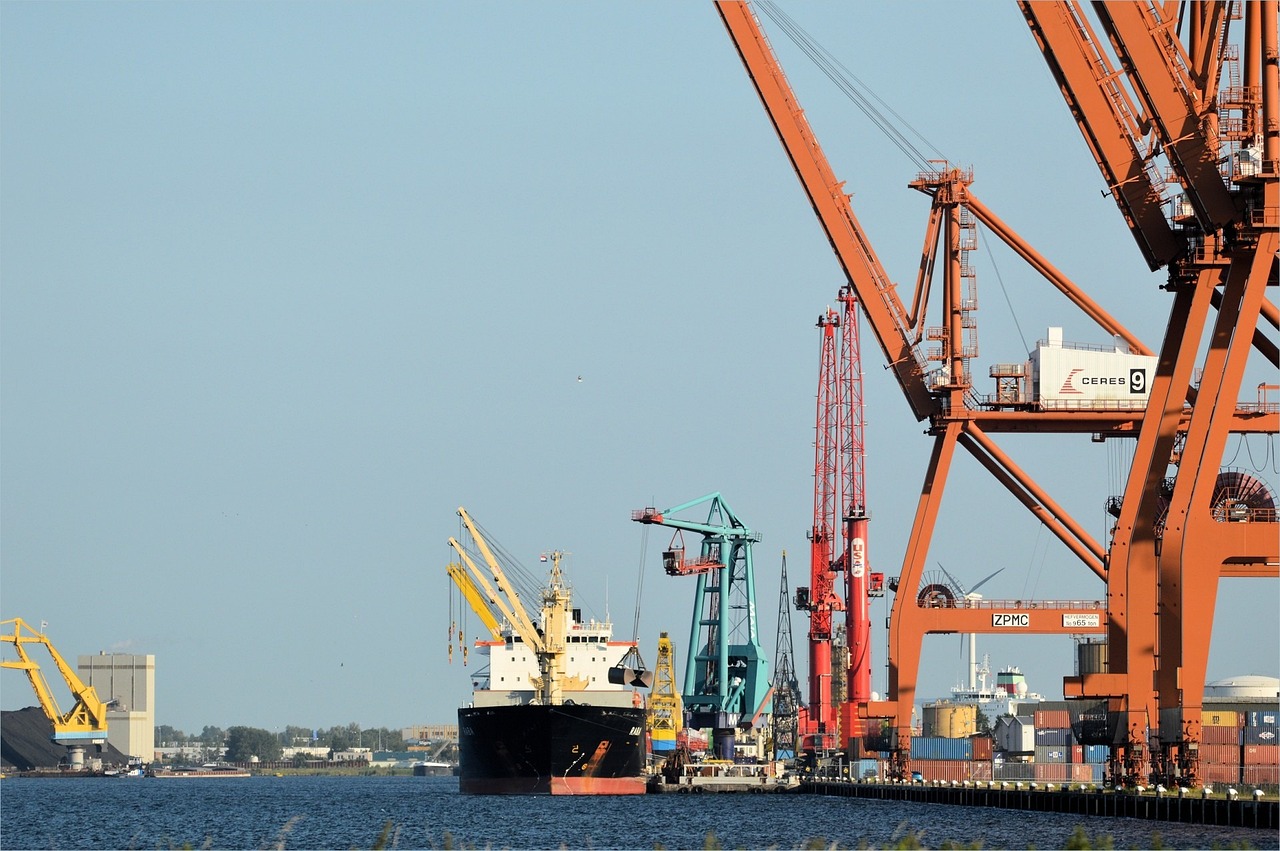
On 4 November 2019, a Zhejiang company booked a shipment of glassware from Ningbo to Bandar Abbas, Iran, through a Ningbo forwarder. The forwarder passed the box to a Hong Kong carrier for the actual carriage — a carrier whose own website published a penalty schedule for misdeclared dangerous goods. The rates were public. Nobody involved seems to have read them until it was too late.
Seven days later, on 11 November, Ningbo Customs opened the container. Inside was fireworks. Class 1 explosives. The booking description said glassware.
Then the bills started. On 16 January 2020 the Ningbo port authority fined the carrier RMB 100,000. The carrier turned straight around and claimed USD 35,000 plus RMB 6,000 from the forwarder, on top of USD 4,553 in detention and RMB 838 in de-stuffing and container-list fees. The forwarder paid the lot, then sued the Zhejiang shipper to recover it. Judgment landed on 30 June 2021. Here's the thing: the forwarder sat in the middle and paid out at both ends first, and waited a year and a half to find out how much of it was actually his.
Key Details
The real fight in this case was not whether anyone pays. It was what that USD 35,000 actually is. The carrier called it a "fine" — a word that sounds like a ticket from a government office, final and non-negotiable. That name matters. It matters more than the number.
The court rejected the label outright. The holding is blunt: a sea carrier is not an administrative body, and it has no direct legal basis to collect "fines" from its agents. A carrier "fine" arising from misdeclared contraband is, in nature, liquidated damages. A carrier is not a regulator. It cannot fine anyone.
One character apart in Chinese, opposite consequences in practice. A fine is an exercise of state power — you pay it and that's the end of it. Liquidated damages is a contract term, and if it is excessive, you can ask a court to reduce it. Civil Code Article 585 is sitting right there, and it has been since 2021.
So the court benchmarked the claim against dead freight on dangerous-goods rates, then weighed the shipper's intent, what the industry normally charges, and what it would have cost to ship that cargo legally as Class 1. It cut USD 35,000 down to USD 20,000 — about 43% off. The RMB 100,000 administrative fine, the USD 4,553 detention and the RMB 838 in fees were upheld and split by fault, half each. Interest ran from 1 August 2020. Everything else the carrier asked for was thrown out.
Looking Ahead
First: stop reading the word "fine" as a fine. Legally it is liquidated damages, which means you can negotiate it, defend against it, and ask a court to cut it down — but only if you raise it. Don't expect a judge to lower the number on his own. My advice: put the reduction request in your first written reply to the claim, not your last.
Second, don't get carried away. A companion case in the same library (2024-10-2-144-001) settled the other half of it: the carrier does not need to prove the misdeclaration caused it an actual loss. So "the carrier lost nothing" is a dead argument in a Chinese courtroom. What is still open is the amount, not the liability.
Third, and this is the one that actually saves you money: move the checkpoint to the booking desk. Case 2024-10-2-202-001 holds that even when the shipper genuinely did not know the goods were dangerous and never notified the carrier, the shipper pays first — then chases whoever actually misdeclared. Whether that recovery ever arrives is a separate lawsuit with its own calendar. This one took nineteen months. That's your answer.
So ask one more question at booking. Keep one more cargo description and one photograph. Bottom line: the cost of stopping a bad booking is the cheapest of every cost in this story — cheaper than the penalty, cheaper than the detention, and far cheaper than a year and a half of your cash sitting in a court file.
Market Outlook
My read: this line of cases has settled the question in practice. A carrier penalty for misdeclaration is liquidated damages — reducible, but not escapable. The argument has moved off "do I pay" and onto "how much", and out of the courtroom and back to the booking desk. Frankly, that shift favors whoever controls the paperwork at origin, which is usually not the party that ends up paying the invoice. For your business, the exposure shows up in two places at once: your quote, because detention and de-stuffing fees get split by fault rather than waived, and your cash, because the forwarder in this case paid every bill up front and recovered a corrected number nineteen months later. Chances are your supplier will sign a written declaration that the goods contain no dangerous component without blinking — and the one who hesitates is the container you should open. We run that check before the booking is confirmed, not after the box is stopped; see how we handle dangerous goods and compliance at origin. So why is your cargo description still being sent over in a one-line WeChat message?
JETWAY Supply Chain is your execution partner on the ground in China — based in Tianjin, licensed as an NVOCC (MOT) and a member of CIFA, FIATA and WCA. We handle special cargo and compliance (dangerous goods, chemicals, batteries) across ocean, air, rail and road, and we pre-check your documents before the box is stuffed so your filing clears the first time. Send us your next booking and we will run the checks above against your sailing date. Request a quote.