Non-Hazardous on Paper, Rejected at the Gate: Why Benzyl Benzoate Bookings Fail on MSDS Section 14
Non-Hazardous on Paper, Rejected at the Gate: Why Benzyl Benzoate Bookings Fail on MSDS Section 14
Executive Summary
Benzyl benzoate (CAS 120-51-4) normally moves as ordinary general cargo — no flashpoint crisis, not corrosive, not classed as a dangerous good under IMDG. The trap is that "normally" depends on purity, solvent and impurities, and the booking almost always dies on a bad MSDS Section 14, not on the product. Under China's dual-penalty hazardous-chemical regime, one wrong line can cost your company 5 to 10 times the cargo value and the individual signer 20,000–50,000 RMB. Get the non-hazard assessment done and write Section 14 to the current IMDG before you book.
| What it is | Benzyl benzoate (CAS 120-51-4) |
| IMDG status in normal form | Not a dangerous good — moves as general cargo |
| The document that grounds bookings | MSDS Section 14 (transport information) |
| Common false class when self-filled | Class 9 miscellaneous |
| Non-hazard assessment cost | from ~RMB 800 |
| Re-document after rejection | ~RMB 3,000 |
| Re-test + non-haz cert after rejection | ~RMB 6,000 |
| Demurrage + re-booking at depot | ~RMB 9,000 per shipment |
| Company fine (false declaration) | 5–10× the cargo value |
| Individual fine (responsible signer) | RMB 20,000–50,000 |
Is It Dangerous? Here's the Short Answer
Benzyl benzoate is not a dangerous good in its normal form. You can move it as general cargo — no UN number, no DG packing certificate, no hazard label. That is how most of it sails.
But "normal form" is doing the heavy lifting in that sentence. Change the purity, the solvent ratio, or the impurity profile and the classification can flip. In its normal form it isn't a flammable liquid, it isn't corrosive, and it isn't classed as toxic — so it doesn't fall under Class 3, Class 8 or Class 6. I've seen a buyer self-fill the MSDS transport block as "Class 9 miscellaneous" and then get asked for a DG packing certificate he never needed. Pure self-inflicted trouble. Confirm the real class with a proper assessment, not an old template you found online. Don't bet on it.
My read: nine shipments out of ten clear as non-hazard with no problem, but that last tenth of the risk lives entirely in the paperwork rather than in the drum itself, which is why you should stop arguing about the UN number and start getting the MSDS right while keeping a non-hazard certificate on file. Carriers and LCL warehouses now check Section 14 harder than they check the goods — especially after the dual-penalty law landed, a wrong declaration hits both your company and the person who signed it. Write to the current IMDG (Amendment 42-24). Don't copy last year's edition number.
Where Bookings Get Stuck: MSDS Section 14
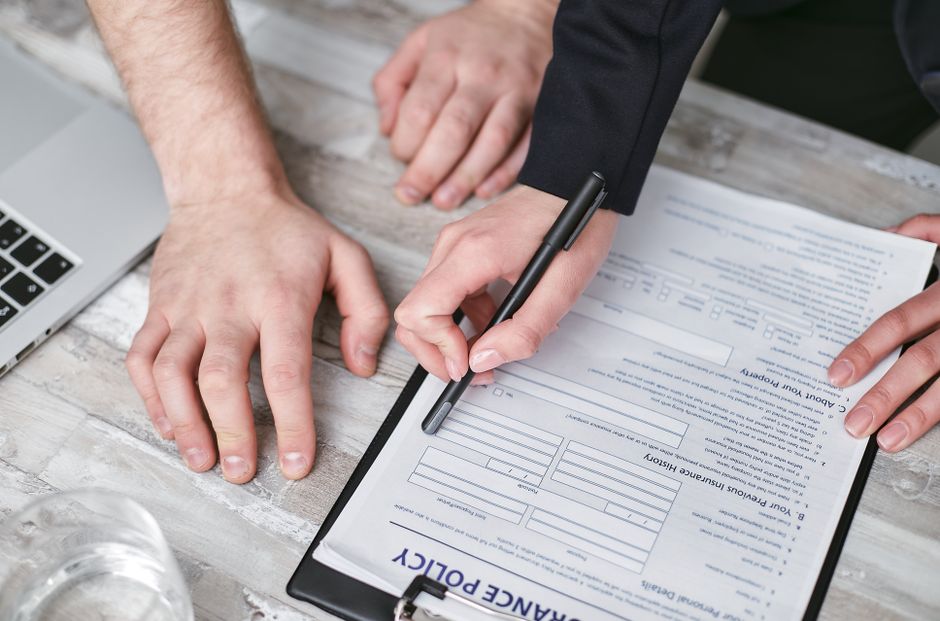
Eight out of ten rejections I see trace back to one place — Section 14 of the MSDS, the transport-information block. Three mistakes repeat.
First, someone writes "not restricted" and attaches no non-hazard assessment. The carrier won't touch it. Second, the shipping name and UN number are lifted from another company's template and don't match your actual composition. Third, the document cites an old IMDG edition instead of the current one. Benzyl benzoate is exactly the kind of cargo that falls into all three — it looks ordinary, so people think they can skip the work, and that is precisely when it gets held.
Frankly, customs and carriers care most about whether Section 14 is complete and consistent with what is actually in the drum. The problem? You assume non-hazard means "nothing to declare" — but non-hazard means you must declare why it is non-hazard. Miss that and your box sits.
Anyone who has been burned knows the math. A rejected benzyl benzoate booking runs roughly RMB 3,000 to re-document, RMB 6,000 to re-test and issue a non-hazard certificate, and RMB 9,000 in demurrage plus re-booking while the container waits at the depot — easily RMB 5,000 to 20,000 a shipment. Calm-looking product, calm-looking risk. Compare that with RMB 800 for a non-hazard assessment and half a day to write Section 14 correctly. You do the arithmetic.
Three Moves Before Your Next Booking
Three steps, none skippable.
① Write Section 14 to the current IMDG, and make the transport info match your real composition — no template copy-paste. ② If you are unsure, commission a non-hazard assessment from a third-party lab and keep it with the cargo; when the carrier or LCL warehouse asks, you hand it over on the spot. ③ Keep the component test report and formulation traceability on file. Under the dual-penalty law, a false declaration costs the company 5 to 10 times the cargo value and the individual signer RMB 20,000 to 50,000. The documents are your shield. Get the assessment first. Don't wait for the rejection.
Your next move: pull the last benzyl benzoate booking you filed and check Section 14 against the current IMDG tonight. If it cites an old edition or carries no non-hazard certificate, that is the box that gets held next time. Want us to screen it against your sailing date before you book? Send it over — and if you would rather we handle the document pre-check, request a quote and we will run the full check before the container is stuffed.
Market Outlook
Bottom line: enforcement here is tightening, not loosening. China's hazardous-chemical dual-penalty regime has made carriers and warehouses far less willing to look the other way on a thin MSDS, and they now spot-check Section 14 on ordinary-looking cargo like benzyl benzoate — that is where the easy mistakes hide. My read: the cost of a rejected chemical booking will keep rising as more warehouses automate the document check, so the cheap insurance is to file the non-hazard assessment up front. What this means for your quote: build RMB 800 and half a day into every non-hazard chemical you ship from China, and name the assessment in the booking so your supplier and carrier cannot point at each other later. The catch is timing — a certificate rushed after the booking is rejected costs ten times what it costs before.
JETWAY Supply Chain is your execution partner on the ground in China — based in Tianjin, licensed as an NVOCC (MOT) and a member of CIFA, FIATA and WCA. We handle special cargo and compliance (dangerous goods, chemicals, batteries) across ocean, air, rail and road, and we pre-check your documents before the box is stuffed so your filing clears the first time. Send us your next booking and we will run the checks above against your sailing date. Request a quote.